Getting back on the road
Getting Back Behind the Wheel After a Car Accident
Driving after a collision is not simply a question of whether you can tolerate sitting in the seat. Safe driving also depends on vision, attention, reaction, judgment, and enough comfortable movement to check the road around you.
If symptoms are severe, rapidly worsening, or you have an emergency warning sign after a crash, call 911 or go to an emergency department. Some symptoms after a head or body jolt can appear hours or days later. Review the warning signs after a car accident if you are unsure what deserves emergency care.
Medical Instructions Come First
If a physician, emergency department, or other clinician told you not to drive, follow that restriction until the person responsible for your care says otherwise. The same rule applies if a medication label or prescriber warns that the medicine can impair driving.
NHTSA warns that some prescription and over-the-counter medicines can affect judgment, coordination, reaction time, or alertness while driving.
A blog page cannot medically clear you to drive.
Do Not Drive Through Dizziness, Confusion, or Significant Drowsiness
Dizziness, confusion, unusual drowsiness, slowed thinking, vision changes, or other neurological symptoms after a crash can be medically important and can also make driving unsafe. Use appropriate medical care rather than testing those symptoms on the road.
For concussion danger signs and other urgent changes, review the post-crash warning-sign page.
Neck Motion Can Be a Practical Driving Issue
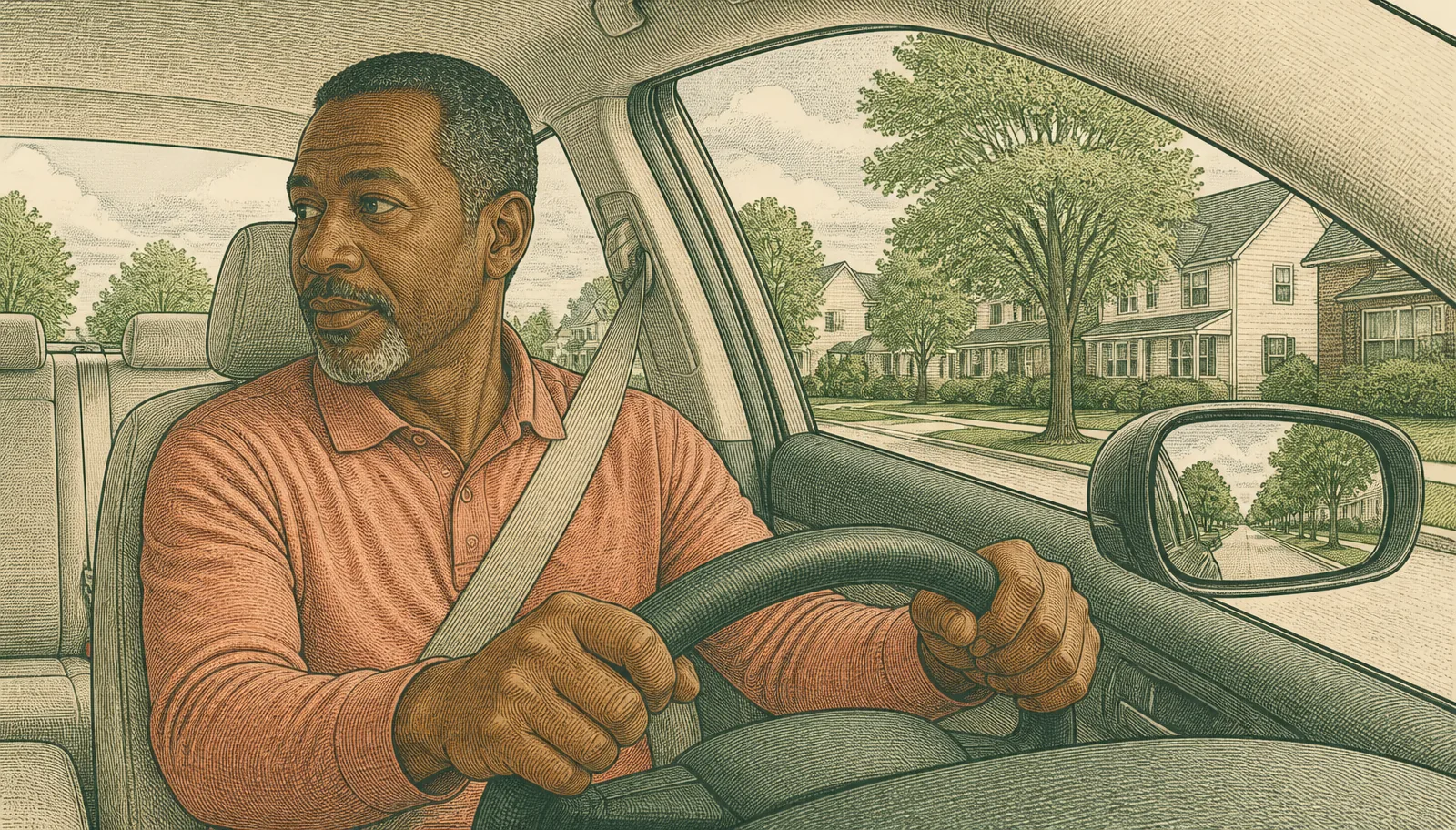
Driving requires you to scan intersections, mirrors, adjacent lanes, and blind spots. If neck pain or stiffness makes normal head movement difficult, do not turn the first drive into a range-of-motion test in traffic.
That limitation is worth describing at an evaluation because it is a real functional goal: being able to look around the vehicle comfortably and safely.
Anxiety After a Collision Is Real Too
Some people feel physically capable of driving but become tense, distracted, or overwhelmed when they get back into traffic. That reaction is not a chiropractic diagnosis. If anxiety, panic, intrusive memories, or fear of driving is significant or persistent, discuss it with an appropriate healthcare professional rather than expecting neck or back treatment to solve it.
There Is No Website Test That Clears You
Being able to sit in the parked car, turn your head once, or drive around the block does not substitute for individualized medical advice when a significant injury, concussion, medication effect, or driving restriction is involved.
If the remaining limitation is musculoskeletal after urgent concerns are addressed, an evaluation may help determine whether the neck or back complaint is appropriate for conservative care.
See car accident injury evaluation and chiropractic care.
Driving Requires More Than Less Pain
A person can feel better and still have a driving limitation.
Driving depends on attention, reaction time, vision, coordination, comfortable sitting, and enough neck movement to check mirrors and blind spots. A medication can matter too if it causes drowsiness, slowed reaction, or impaired judgment.
That is why a pain score alone cannot clear someone to drive.
Test the Real Movements Before the Real Road
Without turning this into a medical clearance test, you can notice whether ordinary driving movements are still difficult.
Can you look over the shoulder comfortably? Can you rotate enough to check adjacent traffic? Can you sit without becoming distracted by pain? Can you move the foot between pedals normally? Can you enter and exit the vehicle without major guarding?
If those basic movements are clearly limited, that is useful information to discuss with the appropriate clinician before resuming normal driving demands.
Medication Instructions Matter
NHTSA warns that some prescription and over-the-counter medicines can affect judgment, coordination, reaction time, or alertness while driving.
Read the label and follow the instructions from the prescriber or pharmacist.
Do not assume that a medicine is safe for driving simply because it is common or available without a prescription.
Start With the Driving Demand You Actually Have
A five-minute local trip and a two-hour highway drive are different functional demands.
So are daytime driving, heavy traffic, bad weather, and work that requires driving for most of the day.
The question is not just whether you can sit behind the wheel. It is whether the combination of movement, attention, medication effects, and symptom behavior allows you to drive safely.
Chiropractic Care Does Not Issue a Universal Driving Clearance
A chiropractic evaluation may help assess neck or back movement and other musculoskeletal limitations.
It does not automatically determine whether a person is medically safe to drive.
If dizziness, confusion, visual change, significant drowsiness, neurological symptoms, or another medical concern is part of the picture, the appropriate medical guidance comes first.
The Cincinnati car accident recovery guide puts driving into the larger framework: handle medical safety first, then track the functional activities that changed and use the right source for each remaining question.
Before increasing driving time, pay attention to whether the problem changes as the trip gets longer. A person may tolerate a short neighborhood drive but become distracted by neck or back discomfort after twenty or thirty minutes. That difference is useful functional information. It can help separate “I can sit in the car” from “I can manage the driving demand I actually have.”
Published September 22, 2026
Care at Spine & Motion is provided by Nicholas Heuker, DC.