Symptom watch
Symptoms Can Appear After a Car Accident Even If You Felt Fine at First
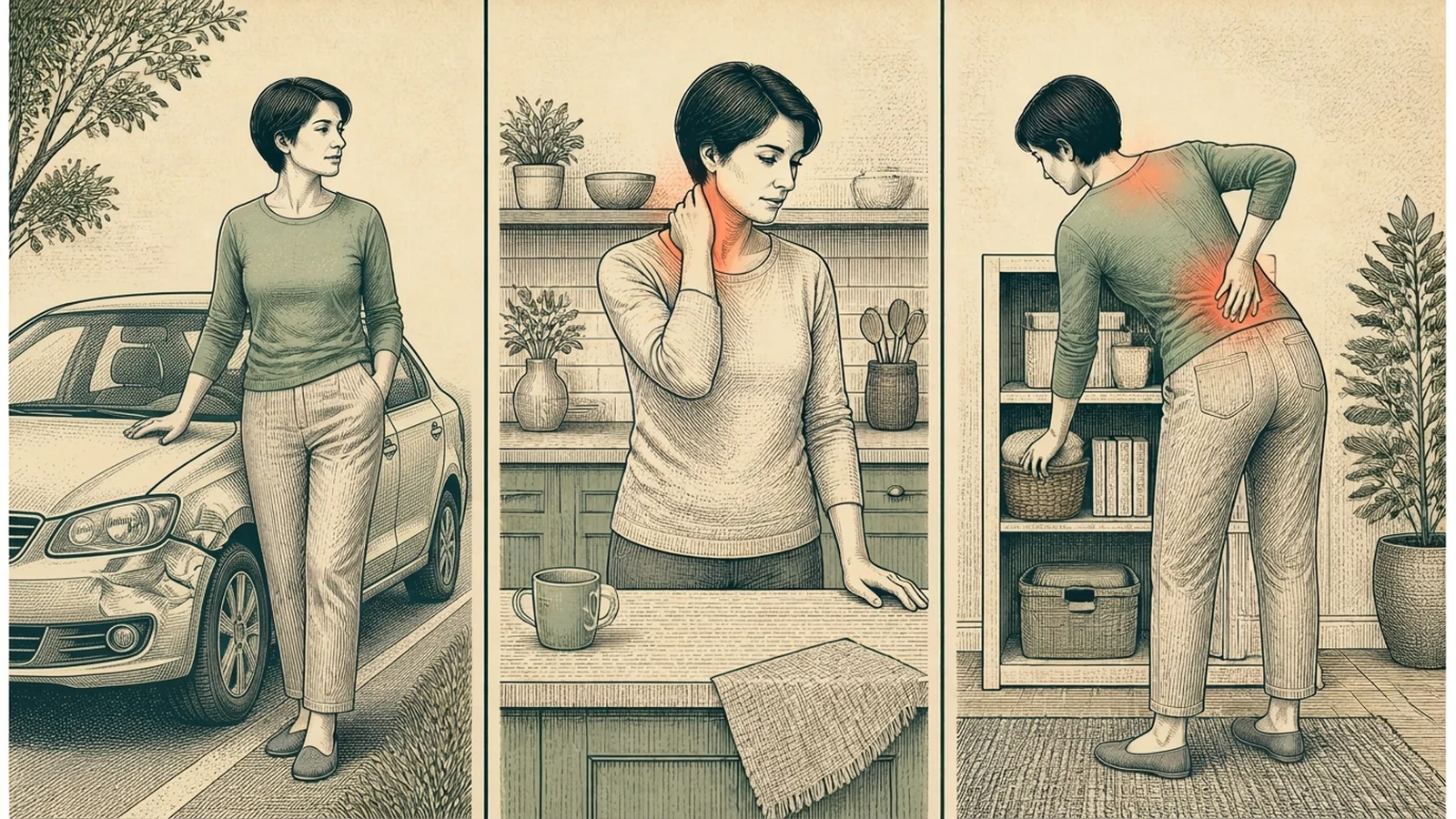
A calm first hour does not answer every medical question after a collision. Some symptoms, especially concussion symptoms, can emerge later. The useful question is what changed, whether any danger sign is present, and what kind of evaluation the current symptoms call for.
What to track
What changed, when you noticed it, and whether it is improving, worsening, or about the same.
If symptoms are severe, rapidly worsening, or you have an emergency warning sign after a crash, call 911 or go to an emergency department. Some symptoms after a head or body jolt can appear hours or days later. Review the warning signs after a car accident if you are unsure what deserves emergency care.
Feeling Fine at the Scene Does Not Settle Everything
For mild traumatic brain injury or concussion, the CDC notes that some symptoms can appear hours or days after the injury. That is one reason a new headache, confusion, vomiting, unusual drowsiness, neurological change, or other danger sign deserves attention even if you initially felt okay.
Read the CDC concussion information.
Neck or back soreness can also become more noticeable after the scene. Timing alone does not identify the tissue involved or prove a diagnosis. The change is information to report, not a label to assign yourself.
What Timing Can Tell You, and What It Cannot
Timing can tell you
- A symptom was absent, mild, or less noticeable at one point and became noticeable later
- The pattern is changing rather than staying fixed
- The timeline is useful history to report to the clinician evaluating you
Timing cannot tell you
- Which tissue or structure is responsible
- How serious the problem is by itself
- Whether a particular treatment is appropriate
- What an insurer or legal process should conclude about causation
Timing is part of the history. It is not a diagnosis. The safer use of a timeline is to describe what changed and then judge the current symptoms on their own medical significance.
Do Not Use a Countdown
There is no responsible website rule that says day two is the worst day, day three proves an injury, or you must see a chiropractor within a particular number of days. Those claims create urgency without examining you.
If symptoms are severe, worsening, or include an emergency warning sign, get medical care based on the symptoms rather than the calendar. If the concern is mainly persistent neck or back soreness after urgent issues have been addressed, an evaluation can be considered without pretending there is a magic deadline.
What Is Useful to Track?
You do not need a medical vocabulary. A few ordinary details are more useful than trying to diagnose yourself.
- What changed after the collision
- When you first noticed the change
- Which ordinary activities are harder now
- Whether the problem is improving, worsening, or staying about the same
- What medical evaluations or discharge instructions you have already received
If you were given medical follow-up instructions, those instructions take priority over a website article.
When to Get Medical Care
Use the post-crash warning-sign page for symptoms that need emergency attention. A new or worsening danger sign deserves care even if it appears after an earlier evaluation.
When a Musculoskeletal Evaluation May Fit
If urgent medical concerns have been addressed and neck or back soreness, stiffness, or limited movement is still affecting normal activity, a musculoskeletal evaluation may be reasonable. The purpose is to determine what appears appropriate for conservative care and what should be referred elsewhere.
See how car accident injury evaluation works at Spine & Motion.
Questions About Symptoms That Show Up Later
Can symptoms start hours or days after a car accident?
Yes. The CDC specifically notes that some concussion symptoms may appear hours or days after the injury. Other post-crash symptoms can also become more noticeable later, but timing alone does not diagnose the cause.
Does delayed neck pain prove that I have whiplash?
No. Whiplash is one possible explanation for neck symptoms after a collision, but delayed pain by itself does not establish the diagnosis. An examination and the rest of the history matter.
How soon do I need to see a chiropractor after a crash?
There is no responsible universal chiropractic deadline. Emergency and medically urgent symptoms come first. If those concerns have been addressed and musculoskeletal symptoms remain, call and ask whether an evaluation makes sense.
Care at Spine & Motion is provided by Nicholas Heuker, DC.