Sleep
Sleeping After a Car Accident When Lying Down Is the Hard Part
After a collision, sleep can be disrupted by neck or back soreness, headache, stress, medication effects, or simply not being able to find a comfortable position. The first question is not which pillow is perfect. It is whether any symptom needs medical attention or specific follow-up.
If symptoms are severe, rapidly worsening, or you have an emergency warning sign after a crash, call 911 or go to an emergency department. Some symptoms after a head or body jolt can appear hours or days later. Review the warning signs after a car accident if you are unsure what deserves emergency care.
If a Head Injury Is Possible, Follow Medical Instructions
If you were evaluated for a concussion or other head injury, follow the discharge and monitoring instructions you were given. Do not replace those instructions with a rule from a chiropractic blog about whether someone should be awakened, how often they should be checked, or when sleep is considered safe.
The CDC notes that some concussion symptoms can appear hours or days after the injury. A new or worsening danger sign deserves medical attention.
Read the CDC concussion signs and danger signs.
Pain Can Make Sleep Position Feel Complicated
When the main problem is musculoskeletal soreness and urgent medical concerns have been addressed, comfort matters more than forcing one "correct" sleep position.
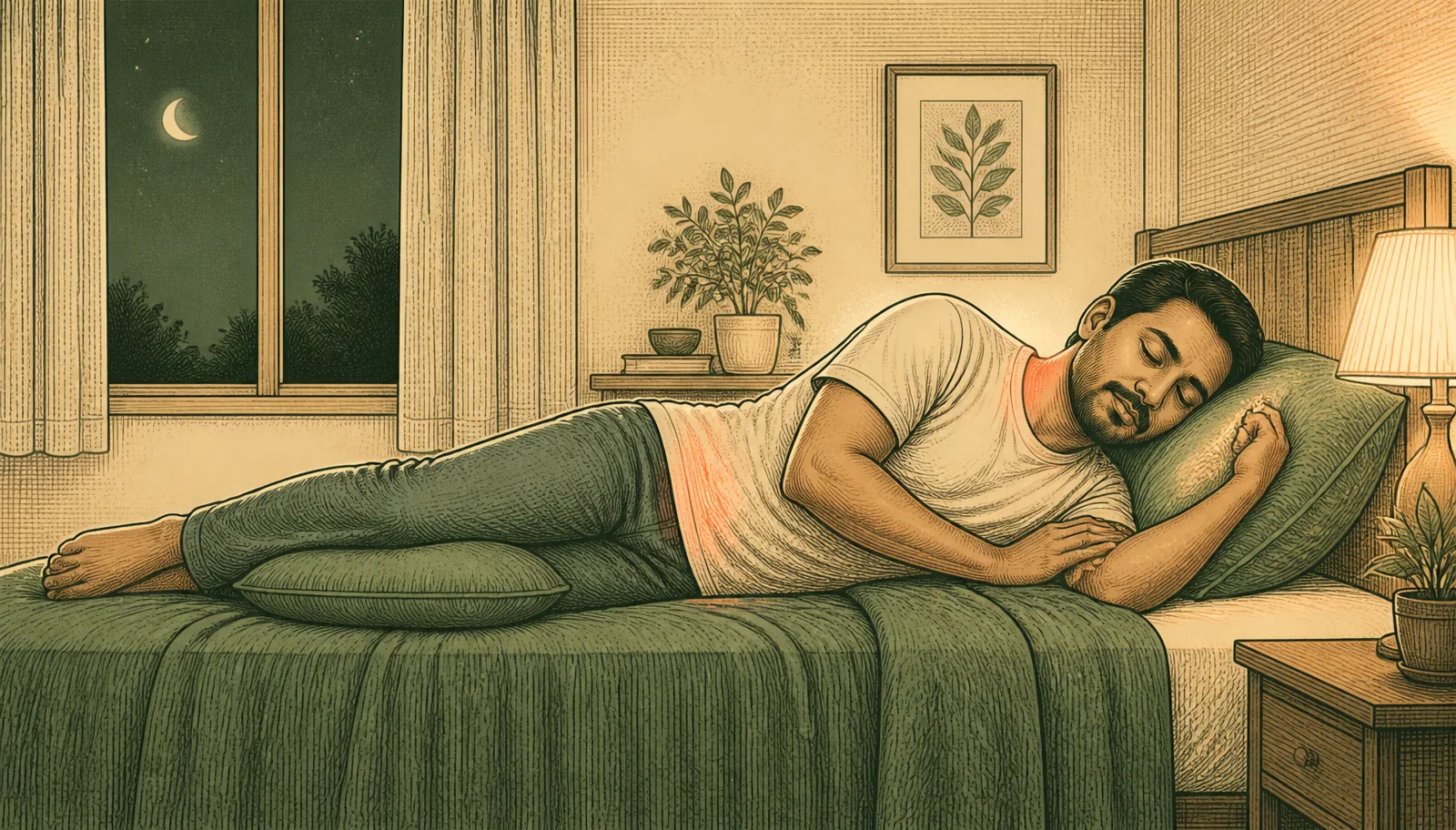
For some people, lying on the back with support under the knees feels better. Others prefer side-lying with support between the knees or a pillow arrangement that keeps the neck comfortable. These are comfort ideas, not a treatment prescription, and you should stop using a position that clearly worsens symptoms.
Avoid Turning Bedtime Into a Stretching Session
A freshly sore neck or back does not need to pass an aggressive range-of-motion test before sleep. Gentle position changes and ordinary comfortable movement are different from forcing a painful stretch or repeatedly manipulating the neck because it feels tight.
If you were given activity restrictions, follow them.
Medication Can Affect the Night Too
Use medications only as directed by the clinician or label responsible for them. Some medicines can cause drowsiness or affect coordination. Do not add, stop, or change a prescribed medicine based on a blog article.
If a medication side effect is concerning or you are unsure how it should be taken, contact the prescriber, pharmacist, or another appropriate medical professional.
When Nighttime Symptoms Need Medical Attention
A severe or worsening headache, repeated vomiting, confusion, seizure, new weakness or numbness, trouble breathing, severe chest or abdominal pain, marked difficulty waking, or another post-crash danger sign deserves medical evaluation rather than another pillow adjustment.
Review the post-crash warning signs.
When Follow-Up for Neck or Back Soreness May Fit
If urgent concerns have been addressed but neck or back discomfort is repeatedly interfering with sleep, an evaluation may help determine whether the complaint appears musculoskeletal and whether conservative care is appropriate.
See car accident injury evaluation and chiropractic care.
Comfort Is Different From a Medical “Best Position”
After a crash, people often search for the one correct way to sleep.
There usually is not one universal position that works for everyone.
A comfortable position may depend on where the soreness is, what movements aggravate it, what position the person normally uses, and whether there are medical instructions that should be followed.
The goal is not to force the neck or back into a posture because a diagram online said it was ideal.
Use Sleep as a Function Check
Sleep can be a useful part of the Function Snapshot.
Are you waking more often than before the collision? Does rolling over trigger neck or back discomfort? Are you avoiding one side because the shoulder is sore? Do you need more time to get comfortable?
Those details help describe how the problem is affecting ordinary life.
They do not identify the injured structure by themselves.
Know When Sleepiness Means Something Different
Being tired because sleep is uncomfortable is different from unusual drowsiness after a head injury.
If someone is difficult to wake, unusually confused, repeatedly vomiting, developing a worsening headache, or showing another concerning neurological change after a crash, that belongs with appropriate medical care rather than a discussion about pillows or sleep posture.
Use the warning-sign guide when the concern is more than ordinary discomfort.
What to Avoid
Do not use alcohol, extra medication, or someone else’s prescription simply to force sleep after a crash.
Follow medication directions and any discharge instructions you were given.
If urgent concerns have been addressed but sleep remains limited because of neck, back, or shoulder-area soreness, the broader neck, back, and shoulder pain guide can help you organize what changed before deciding whether a musculoskeletal evaluation makes sense.
Morning Function Can Add Another Clue
Pay attention to what happens after you get out of bed, not only how many hours you slept. Is the neck noticeably stiffer for the first part of the morning? Does standing from bed take longer? Does the back settle after ordinary movement, or does the pattern keep worsening? Those observations can help describe the effect of sleep without pretending that one mattress, pillow, or position explains the problem.
Published September 12, 2026
Care at Spine & Motion is provided by Nicholas Heuker, DC.