Terminology
Soft Tissue Injury After a Car Accident, in Plain English
"Soft tissue injury" is a broad description, not a single diagnosis. Muscles, tendons, ligaments, and other non-bony structures can be strained, sprained, bruised, or irritated in different ways. The useful question is which structure appears involved, how function changed, and whether anything more serious needs medical evaluation first.
If symptoms are severe, rapidly worsening, or you have an emergency warning sign after a crash, call 911 or go to an emergency department. Some symptoms after a head or body jolt can appear hours or days later. Review the warning signs after a car accident if you are unsure what deserves emergency care.
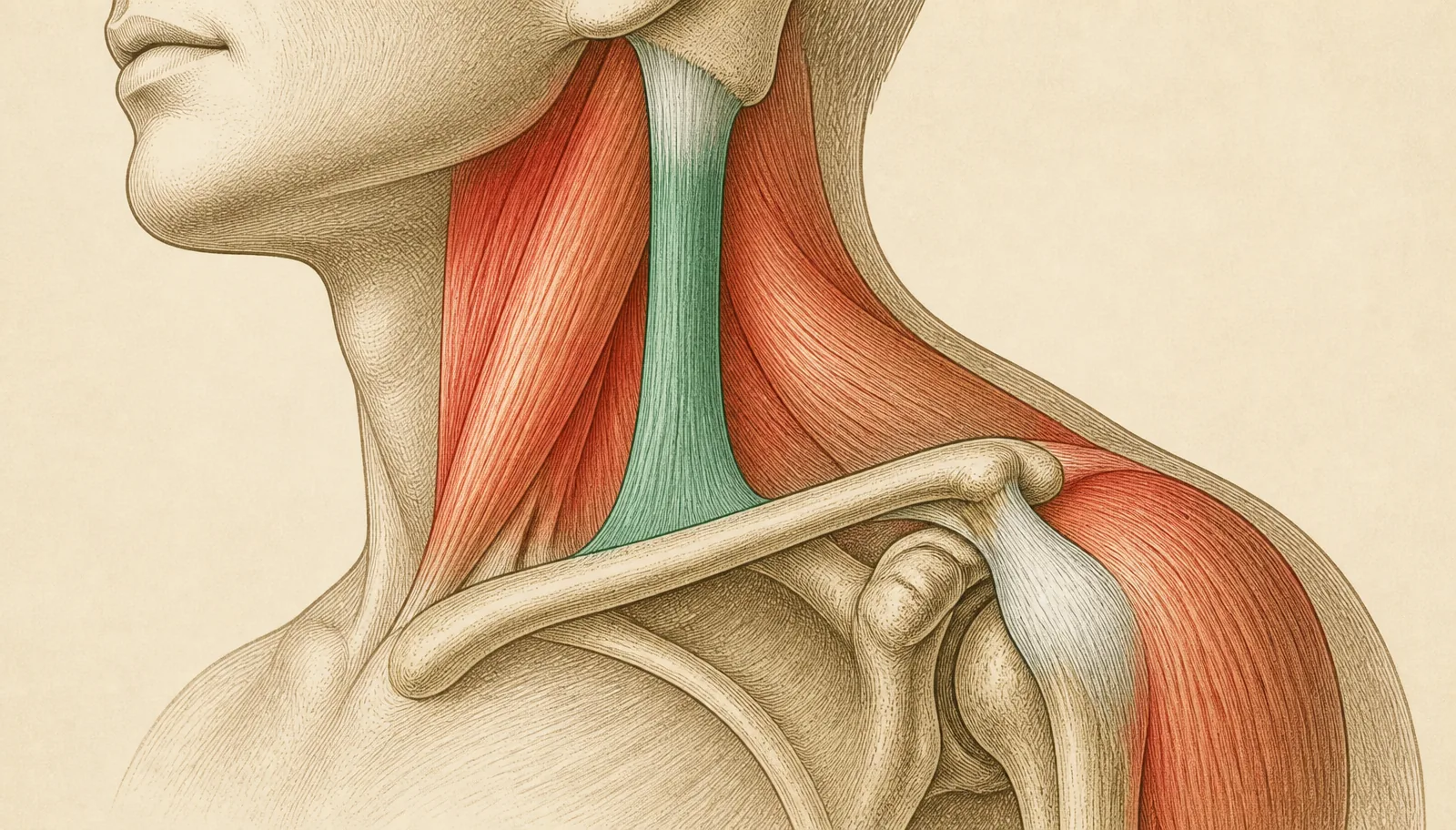
What Counts as Soft Tissue?
Muscles produce force and movement. Tendons connect muscle to bone. Ligaments connect bone to bone and help support joints. These structures can be injured without a fracture being present.
A strain generally refers to injury involving muscle or tendon. A sprain generally refers to injury involving a ligament. Those words describe categories, not the severity of a specific person's injury.
MedlinePlus information on sprains and strains.
Soft Tissue Does Not Mean Minor
The phrase can sound dismissive because "soft" sounds less serious than bone. In practice, severity varies. Some sprains and strains settle with time and appropriate activity. Others cause substantial pain, swelling, weakness, or loss of function and deserve clinical evaluation.
A website cannot grade a sprain or strain from the pain number alone.
Imaging Depends on the Question Being Asked
Do not use the shortcut "soft tissue never shows on X-ray" or "an X-ray was normal, so nothing is injured." Different imaging methods answer different questions, and the decision to image depends on the history, examination, suspected injury, and medical need.
A normal result on one study should be interpreted in the context of what that study was designed to evaluate and what the clinician found.
After a Crash, Trauma Changes the First Decision
A possible fracture, head injury, progressive neurological symptom, severe chest or abdominal symptom, or another emergency warning sign needs appropriate medical evaluation before someone assumes the problem is a routine sprain or strain.
Review the post-crash warning signs.
What an Evaluation Can Help Sort Out
Once urgent concerns have been addressed, an evaluation can look at where the complaint is located, what movements change it, whether strength or function is limited, how the problem has changed since the collision, and whether conservative musculoskeletal care appears appropriate.
This site does not promise a particular treatment method before that evaluation.
How Long Does a Soft-Tissue Injury Take to Heal?
There is no one timeline because "soft tissue injury" covers many different problems and severities. Progress is better tracked through function, symptoms, and reassessment than through a universal calendar.
If symptoms are worsening, new neurological findings appear, or recovery is not progressing as expected, the appropriate response is reassessment rather than simply extending the same plan.
Read more about recovery timelines after a crash.
“Soft Tissue” Is a Category, Not a Complete Diagnosis
The phrase soft tissue injury sounds specific, but it covers several different structures. Muscles, tendons, ligaments, fascia, and other non-bony tissues can all be described as soft tissue.
That means the label can organize the conversation without settling it.
If someone says, “The ER told me it is probably soft tissue,” the next useful questions are still practical. Where is the discomfort? Which movements change it? Is there swelling or bruising? What ordinary activity became harder? Is the pattern improving, staying the same, or becoming more concerning?
Those details give the label context.
Pain Location Alone Cannot Tell You Which Tissue Is Involved
A person may point to the side of the neck, the top of a shoulder, between the shoulder blades, or the lower back and reasonably say, “It hurts right here.”
That is useful information. It is not enough to identify the injured structure.
For example, shoulder-area discomfort may come from the shoulder itself, nearby muscles, or structures in the neck and upper back. Lower-back pain can remain local or be accompanied by symptoms that travel toward the buttock or leg. A headache can occur with neck soreness, but a post-crash headache should not automatically be assumed to come from the neck.
This is why a good evaluation connects location with movement, history, function, and warning signs instead of diagnosing from a body map.
Function Makes a Vague Label More Useful
One of the best ways to make “soft tissue injury” more meaningful is to describe what changed in daily life.
Can you turn your head far enough to check traffic? Can you reach into a cabinet normally? Can you sit through a meeting? Can you lift a laundry basket? Can you sleep in your usual position?
These are not medical diagnoses. They are functional observations.
At Spine & Motion, that type of observation becomes part of a Function Snapshot. If care is appropriate, the same activities can later help show whether meaningful function is actually improving.
Soreness Does Not Create a Universal Treatment Plan
Two people can use the same words to describe their symptoms and still need different decisions.
One person may improve quickly with simple time and ordinary activity. Another may have persistent movement limitations that justify a musculoskeletal evaluation. Another may have warning signs that belong with medical care before chiropractic care is considered.
That is why a website should not turn “soft tissue injury” into a preset number of visits.
The treatment decision should come after the history and examination, not before them.
What the Term Can Tell You and What It Cannot
A soft tissue label can tell you that the discussion is not limited to bones. It can help explain why soreness, stiffness, tenderness, or movement limits may matter after trauma.
It cannot, by itself, tell you:
- exactly which structure is involved
- how severe the problem is
- whether imaging is needed
- whether manipulation is appropriate
- how long recovery will take
- how many visits someone should receive
Those are separate clinical questions.
For a broader look at where neck, back, and shoulder complaints can show up after a collision, use the neck, back, and shoulder pain after a car accident guide. It is designed to help you recognize the pattern without pretending that recognition is the same thing as diagnosis.
Bruising and Swelling Add Context, Not Certainty
Visible bruising or swelling is worth reporting because it adds information about what the body experienced. It still does not identify a specific damaged structure by itself. The useful question remains how the visible finding fits with the trauma history, tenderness, movement, function, and any symptoms that require medical evaluation.
Published August 28, 2026
Care at Spine & Motion is provided by Nicholas Heuker, DC.