Restraints
Seat Belts and Airbags: They Reduce Risk, but You Can Still Be Sore After a Crash
A seat belt or airbag can leave you sore while also doing the job it was designed to do: reducing the risk of more severe injury. The presence of soreness does not mean the restraint failed, and a bruise or tender spot does not tell a website whether there is a deeper injury.
If symptoms are severe, rapidly worsening, or you have an emergency warning sign after a crash, call 911 or go to an emergency department. Some symptoms after a head or body jolt can appear hours or days later. Review the warning signs after a car accident if you are unsure what deserves emergency care.
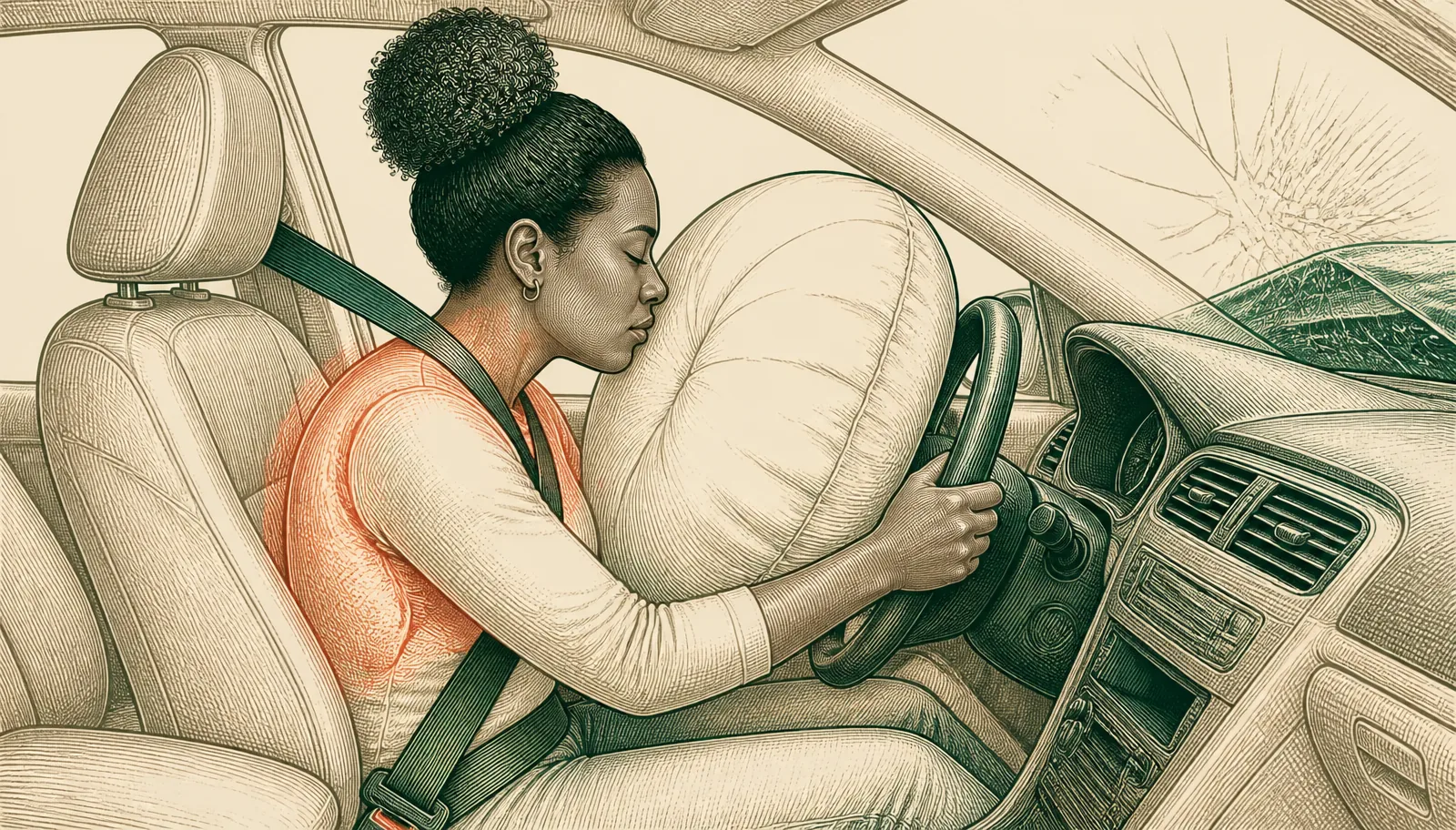
Seat Belts and Airbags Are Safety Systems, Not Injury Proof
The National Highway Traffic Safety Administration describes seat belts as one of the most effective ways to reduce death and serious injury in a crash. Airbags are designed to work with seat belts, not replace them.
NHTSA seat-belt safety information.
NHTSA airbag safety information.
A person can still have chest-wall, shoulder, abdominal, neck, or other soreness after a restrained collision. The job of the restraint system is risk reduction, not a guarantee of zero injury.
Tenderness Along the Belt Path Can Happen
The shoulder belt crosses the chest and shoulder, and the lap belt sits across the pelvis. A sudden load through those areas can produce tenderness or bruising.
Do not use the shape or color of a bruise to decide whether the injury is superficial. Severe or worsening chest pain, trouble breathing, significant abdominal pain, or other concerning symptoms need medical evaluation.
Airbag Deployment Can Add a Different Kind of Soreness
Airbags deploy rapidly and are intended to cushion occupants during certain collisions. Contact with a deploying airbag can contribute to temporary soreness, abrasions, or other injury, while the larger safety benefit is reducing the risk from the crash itself.
If there is breathing trouble, severe pain, significant eye symptoms, neurological changes, or another concerning problem after deployment, seek appropriate medical care rather than assuming the airbag caused only a minor irritation.
A Visible Mark Is Information, Not a Diagnosis
Tell the clinician where the belt contacted you, whether an airbag deployed, and what symptoms followed. Photos you already have can help you remember what changed, but neither a photograph nor a restraint mark substitutes for an examination when symptoms are concerning.
When a Musculoskeletal Evaluation May Fit
After urgent medical concerns have been addressed, persistent shoulder, neck, or back soreness and reduced comfortable movement may be reasonable to evaluate. Chiropractic care is not treatment for internal injury, fracture, concussion, or another emergency condition.
See car accident injury evaluation and chiropractic care.
The Seat Belt and Airbag Did Their Job, but You Can Still Feel Sore
A seat belt and airbag are designed to reduce the chance of more serious injury. That does not mean the body will always feel normal immediately afterward.
During a collision, the shoulder belt can load the chest and shoulder area while the lap belt restrains the pelvis. An airbag can deploy rapidly in front of the occupant. The body may also move against the seat, head restraint, door, or steering wheel.
That combination can leave someone noticing tenderness, bruising, stiffness, or soreness in more than one area.
The important distinction is simple: soreness after restraint contact does not mean the restraint failed. It also does not prove a particular injury.
Where People May Notice Symptoms
Post-crash soreness can be described in areas such as:
- the front of the shoulder where the belt crossed
- the chest wall
- the upper back or shoulder blade area
- the neck
- the lower abdomen or pelvis where the lap belt contacted
- the knees or arms depending on occupant position and vehicle contact
Those locations help describe the event. They do not diagnose the tissue involved.
A visible bruise can also be useful history, but a bruise does not tell you by itself whether there is a deeper injury. The clinical context matters.
What Seat-Belt Marks Can and Cannot Tell You
A mark from the belt tells you there was contact and force in that area.
It cannot tell you exactly how much force the body experienced, whether an internal injury is present, or whether chiropractic care is appropriate.
That is why concerning chest or abdominal symptoms should not be treated as a routine musculoskeletal complaint just because a seat belt was involved.
If you have severe or worsening chest pain, trouble breathing, significant abdominal pain, fainting, unusual weakness, or another serious change, seek appropriate medical care.
Airbags Add Another Layer
Airbags are part of a restraint system, not a soft pillow.
They deploy quickly because they are intended to help protect an occupant during a crash. After deployment, a person may notice irritation, soreness, or tenderness from contact.
Again, the fact that an airbag deployed does not diagnose the injury.
It also does not mean the crash was necessarily severe enough to produce a particular medical condition. Vehicle systems, crash angle, occupant position, and many other factors affect what happens.
NHTSA provides public guidance on both seat belts and airbags because they are core safety systems. That information is useful for understanding protection. It is not a substitute for evaluating symptoms after a specific collision.
Occupant Position Changes the Experience
The driver and passenger can be in the same vehicle and still experience the collision differently.
The driver may have hands on the wheel. A passenger may be turned slightly, looking at a phone, reaching toward a bag, or sitting at a different distance from the dashboard. One person may brace and another may not.
That does not let us predict who is injured more seriously. It explains why two people can describe different soreness patterns after the same crash.
For more on that distinction, the passengers and drivers article explores how seating position, restraint geometry, and body position can affect the experience of a collision.
Use Function to Describe What Changed
Instead of trying to decide whether the seat belt “caused” every sore area, ask what is different now.
Can you lift the arm overhead normally? Does reaching across your body pull through the shoulder or chest? Is turning the head harder? Is getting out of the car uncomfortable? Does taking a deep breath increase chest-wall soreness?
Those observations are useful because they describe function.
They can help a clinician decide whether the remaining complaint looks musculoskeletal, whether another type of evaluation should come first, and what should be reassessed later.
Do Not Judge Injury From Vehicle Damage or Restraint Marks
A small-looking dent does not prove a small injury. A heavily damaged vehicle does not prove a severe injury. The same is true of seat-belt marks.
Vehicle appearance, airbag deployment, and bruising are parts of the history. They are not stand-alone diagnostic tests.
The more responsible approach is to combine the crash history with current symptoms, warning signs, examination findings, and functional change.
That is the same framework used throughout the Spine & Motion car accident recovery content.
When Chiropractic Follow-Up May Fit
If urgent medical concerns have been handled and the remaining problem is neck, back, shoulder-area, or other musculoskeletal soreness with movement limitations, a chiropractic evaluation may be one reasonable next question.
The evaluation should still determine whether the complaint belongs in the office.
It should not assume that every seat-belt or airbag symptom needs manipulation, a fixed treatment plan, or a predetermined number of visits.
The goal is clarity about what changed and what type of care, if any, makes sense next.
Restraint Fit Is Part of the Crash History Too
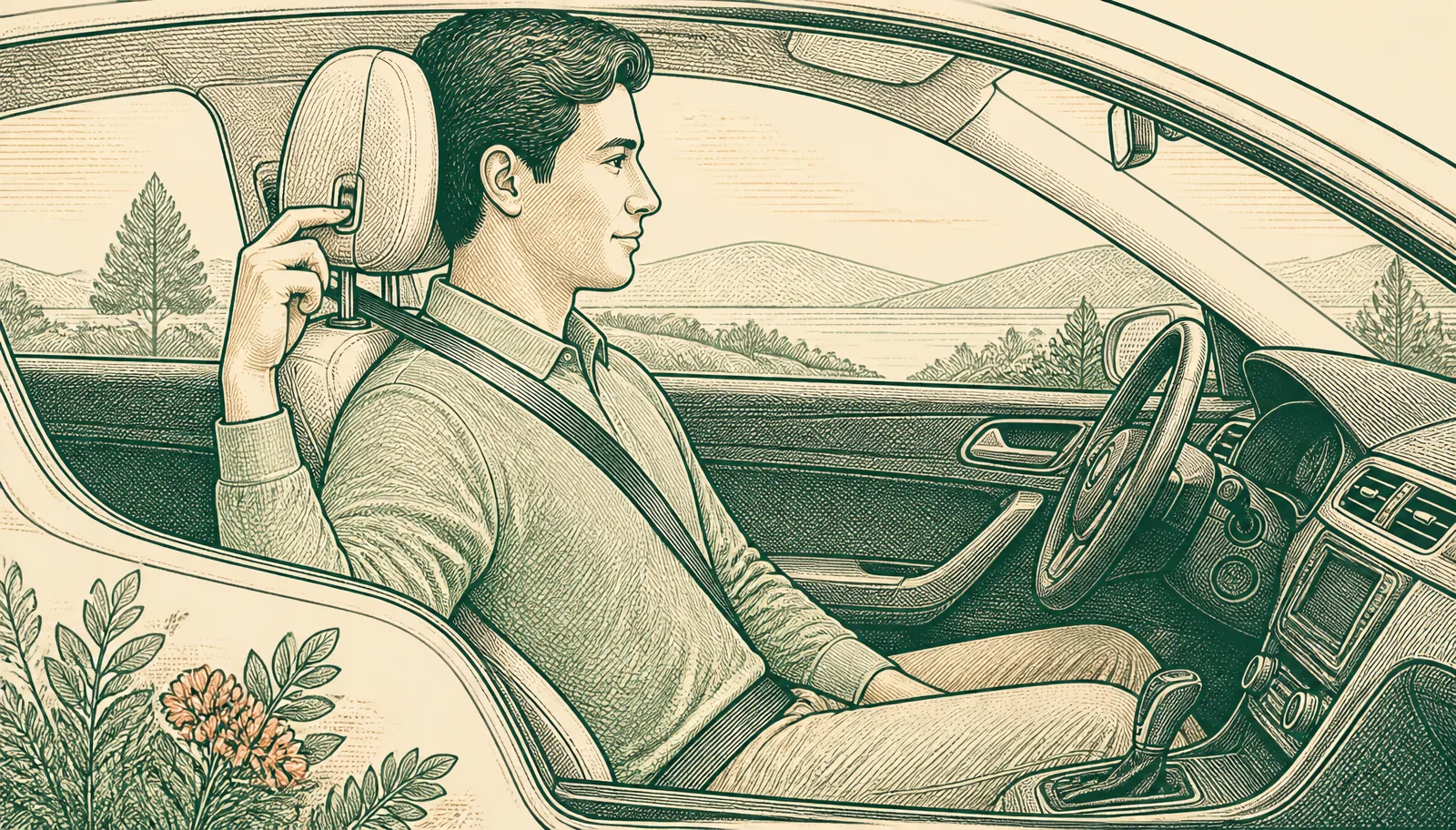
When you describe the collision, mention whether the shoulder belt was positioned normally, whether the head restraint was near the back of your head, and whether you were sitting upright or turned. Those details do not predict a diagnosis, but they help describe how your body was positioned when the restraint system engaged and give context to where soreness appeared afterward.
You do not need to reconstruct crash physics yourself. Simply describe where the belt contacted you, whether the airbag deployed, how you were sitting, and which movements or activities changed afterward. Those facts are more useful than trying to calculate force from the restraint mark.
Published August 30, 2026
Care at Spine & Motion is provided by Nicholas Heuker, DC.