Local and seasonal
Winter Driving on Cincinnati's West Side Hills: What Matters After a Crash
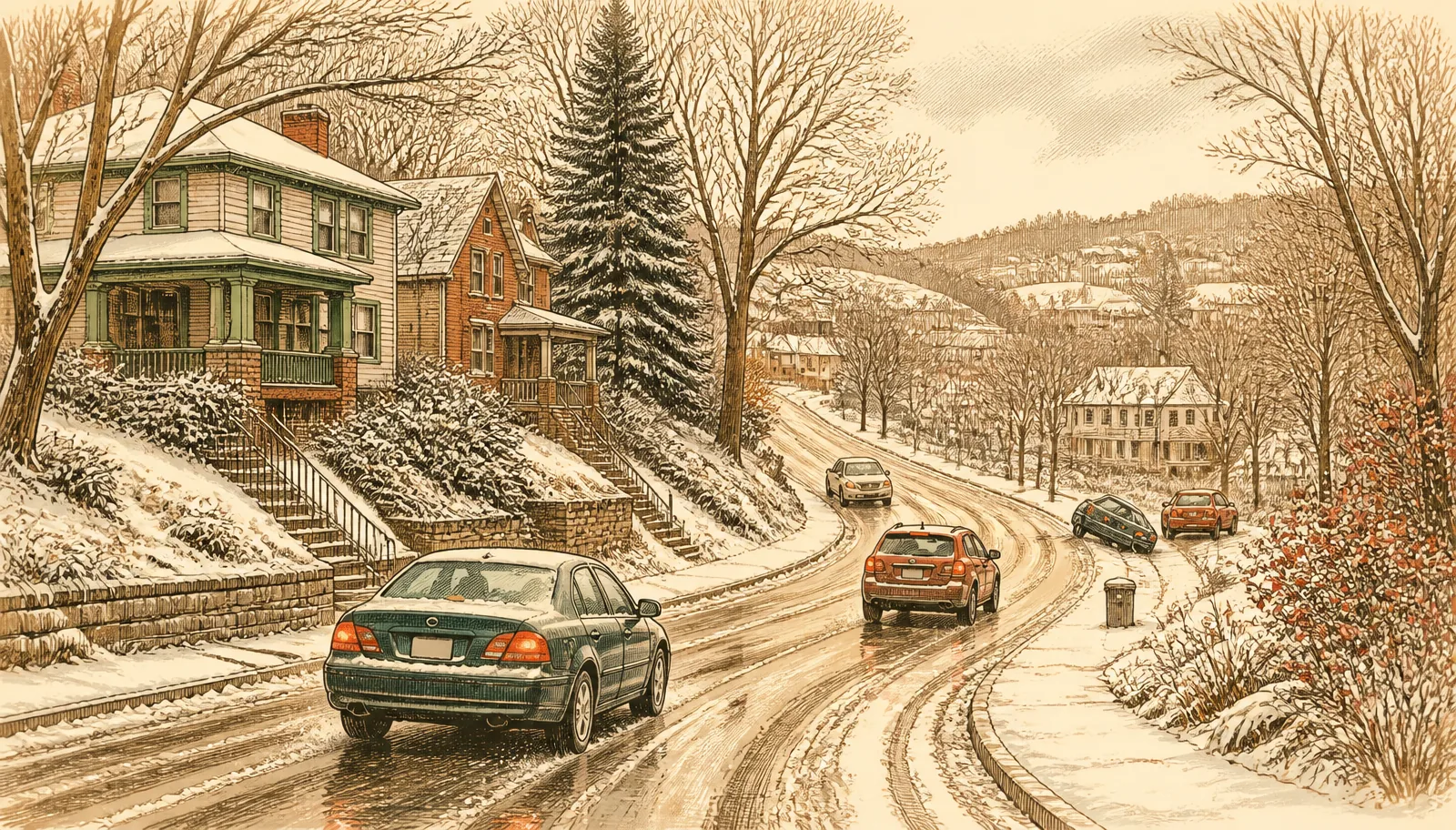
Snow, ice, bridges, shaded pavement, and hills can change traction quickly on Cincinnati's west side. If a winter drive ends in a collision, the response is the same basic order as any other crash: safety first, medical warning signs next, then the report, insurer, and follow-up questions.
If symptoms are severe, rapidly worsening, or you have an emergency warning sign after a crash, call 911 or go to an emergency department. Some symptoms after a head or body jolt can appear hours or days later. Review the warning signs after a car accident if you are unsure what deserves emergency care.
Do Not Let Weather Explain Away an Injury
Knowing why the vehicle slid does not tell you whether someone was injured. A low-speed slide, a harder impact, a spin, or a collision with a fixed object can produce very different outcomes, and the appearance of the vehicle does not diagnose the people inside it.
If a new or worsening danger sign is present, use medical care first.
Winter Conditions Make Scene Safety More Important
After a crash, do not create a second hazard by standing in an unsafe traffic lane or on a slick roadway. Follow emergency-service instructions and move to a safer location when it is possible and appropriate to do so.
This article is not a substitute for police, fire, EMS, or roadway instructions at an active crash scene.
The Crash Report Still Follows the Investigating Agency
Weather does not change the records rule. The police or law-enforcement agency that investigated the collision is the official record holder.
For crashes on Cincinnati's west side, the exact jurisdiction can change over a short distance. Use the department name on the paperwork you were given rather than guessing from the neighborhood name.
See the Cincinnati-area crash-report steps.
Symptoms Can Become More Noticeable After You Get Home
Once the immediate scene is over, pay attention to what changes. For concussion specifically, the CDC notes that some symptoms can appear hours or days after the injury. Neck or back soreness may also become more noticeable later, but timing alone does not establish the cause.
Read the CDC concussion signs and danger signs.
Read about symptoms that appear after a crash.
When Follow-Up May Fit
After urgent medical concerns have been addressed, ongoing neck or back soreness, stiffness, or limited movement can be reasonable to evaluate. The goal is to determine whether the problem appears musculoskeletal and whether conservative care is appropriate, not to prove what the road conditions did to you.
See car accident injury evaluation and chiropractic care.
Cincinnati’s West Side Adds a Real-World Driving Variable
Winter driving on the west side is not only about snow totals.
Hills, shaded pavement, bridges, changing temperatures, and short stretches that freeze before nearby roads can all change how a normal trip feels.
That local context matters because the crash history is more useful when it describes what actually happened rather than relying on a generic “winter accident” label.
Was the road wet, slushy, or icy? Was the vehicle going downhill? Was traffic stopping suddenly? Did the collision happen after the temperature dropped?
Those details help describe the event. They do not diagnose an injury.
Do Not Judge the Body by the Weather or the Car
A low-speed slide on an icy hill does not prove a minor injury.
A badly damaged vehicle does not prove a severe injury.
Weather, road grade, vehicle damage, and impact direction are pieces of the history, not medical tests.
Current symptoms, warning signs, examination findings, and functional change are what help determine the next clinical question.
Winter Can Also Affect Recovery Function
Cold weather may change what a person has to do after the crash.
Clearing snow, walking on slick ground, climbing outdoor steps, carrying groceries in heavy clothing, or driving on another icy day can expose limitations that were not obvious while resting at home.
Those are useful Function Snapshot examples.
Can you turn your head enough to check traffic? Walk confidently on uneven ground? Get into the car without guarding? Scrape a windshield comfortably?
If urgent medical concerns have been addressed but those everyday activities remain limited by neck, back, or shoulder soreness, the Cincinnati post-crash decision guide can help separate the medical, records, insurance, and musculoskeletal questions that come next.
The same idea applies after the road clears. If winter conditions forced you to walk carefully, scrape ice, carry salt, or climb slick steps, note whether those activities exposed a new limitation. Local weather changes the demand, but the useful clinical information is still the function that changed.
Published October 3, 2026
Care at Spine & Motion is provided by Nicholas Heuker, DC.